
Social Anxiety or Autistic Burnout?
Understanding the Difference and Finding the Right Support
Feeling exhausted by social interactions, struggling to communicate, or withdrawing from others can be signs of several different experiences. Two that are often confused are social anxiety and autistic burnout. While they can look similar on the surface, they have different underlying causes and often require different approaches to support and treatment. Understanding the difference can help you make sense of your experiences and access the right kind of help.
What is Social Anxiety?
Social anxiety involves a persistent fear of being judged, criticised, embarrassed, or negatively evaluated by others. Social situations may trigger intense anxiety before, during, and after interactions.
People experiencing social anxiety often find themselves:
- Worrying excessively about what others think of them
- Replaying conversations and interactions afterwards
- Avoiding social situations due to fear or anxiety
- Experiencing physical symptoms such as sweating, shaking, nausea, or a racing heart
- Feeling lonely or isolated because social connections feel difficult
The focus of social anxiety is typically the fear of social judgment.
What is Autistic Burnout?
Autistic burnout is a state of profound physical, emotional, cognitive, and sensory exhaustion that can occur after prolonged periods of stress, masking, navigating inaccessible environments, or exceeding personal capacity.
Common signs of autistic burnout include:
- Extreme fatigue that is not relieved by rest
- Increased sensory sensitivities
- Reduced capacity to manage daily tasks
- Difficulty accessing language or finding words
- Increased shutdowns or freezing responses
- Reduced ability to engage in conversation, including small talk
- Greater need for solitude and recovery time
- Feeling overwhelmed by demands that were previously manageable
The focus of autistic burnout is not fear of judgment but depletion of resources and capacity.
How Executive Functioning Can Be Affected During Autistic Burnout
Executive functioning refers to the brain’s ability to plan, organise, initiate tasks, regulate attention, and manage multiple demands. During autistic burnout, people may notice:
- Difficulty starting tasks
- Increased procrastination despite wanting to complete tasks
- Forgetfulness
- Mental “blankness”
- Trouble making decisions
- Difficulty processing information
- Freezing when faced with unexpected demands
- Reduced capacity to access language, particularly under stress
In workplace settings, this may look like struggling to respond to emails, finding meetings overwhelming, becoming unable to contribute to discussions, or feeling unable to engage in even routine workplace conversations.
The Overlap Between Social Anxiety and Autistic Burnout
Both experiences can involve:
- Avoiding or withdrawing from social situations
- Communication difficulties
- Increased anxiety or panic
- Feeling overwhelmed around people
- Reduced confidence in social interactions
- Emotional distress and exhaustion
Because of these overlapping symptoms, autistic burnout can sometimes be mistaken for social anxiety, particularly in autistic adults who have spent years masking their needs.
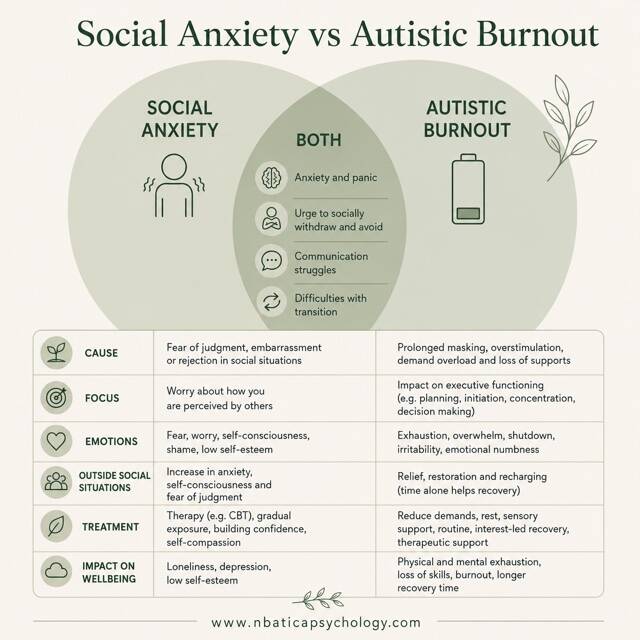
Key Differences
Social Anxiety
- Driven by fear of negative evaluation
- Anxiety is often strongest before and during social interactions
- Social avoidance is motivated by fear
- May continue even when energy levels are otherwise adequate
- Relief often comes from challenging anxious thoughts and gradually building confidence in social situations
Autistic Burnout
- Driven by chronic overwhelm, masking, sensory load, and depleted capacity
- Social interactions may feel difficult because there is insufficient energy available
- Avoidance is often motivated by the need for recovery
- Executive functioning may significantly decline
- Relief often comes from reducing demands, increasing accommodations, honouring sensory needs, and allowing adequate recovery
Many autistic people can experience both social anxiety and autistic burnout at the same time.
When both are present, you may notice:
- Fear of being judged or embarrassing yourself in social situations
- A strong urge to avoid social interactions
- Exhaustion before, during, or after social contact
- Difficulty finding words or keeping up with conversations
- Increased freezing or shutdown responses when overwhelmed
- Feeling lonely and wanting connection, while simultaneously feeling unable to engage
- Anxiety about social situations combined with a genuine need for rest and recovery
In these situations, it is important not to assume that all social difficulties are caused by anxiety alone. Pushing yourself into more social situations when you are already experiencing burnout can sometimes increase distress and prolong recovery. Equally, focusing only on rest and recovery may not fully address fears of negative evaluation if social anxiety is also present.
Effective support often involves addressing both experiences simultaneously, creating opportunities for recovery and reducing overwhelm while also developing skills to manage anxiety and build confidence in social situations. A comprehensive assessment can help identify which factors are contributing most significantly and guide an appropriate treatment plan.
Strategies to Manage Symptoms
If Social Anxiety Is the Primary Issue
- Gradually expose yourself to manageable social situations
- Learn skills to challenge unhelpful thinking patterns
- Practice self-compassion when mistakes happen
- Focus attention externally rather than monitoring yourself
- Develop coping strategies for physical anxiety symptoms
- Consider evidence-based therapies
If Autistic Burnout Is the Primary Issue
- Reduce unnecessary demands where possible
- Prioritise rest and recovery
- Identify and address sensory overload
- Reduce masking when it feels safe to do so
- Create predictable routines
- Break tasks into smaller, manageable steps
- Use accommodations at work or study where available
- Focus on energy recovery rather than pushing through exhaustion
When Should You Seek Professional Help?
It may be helpful to seek support if:
- Symptoms are affecting your work, study, relationships, or daily functioning
- You are increasingly withdrawing from activities you previously enjoyed
- Anxiety feels overwhelming or difficult to manage
- Burnout symptoms are not improving with rest
- You are experiencing significant distress, hopelessness, or low mood
- You are unsure whether social anxiety, autistic burnout, or another factor is contributing to your difficulties
A neurodiversity-affirming psychologist can help identify the factors contributing to your experiences and develop strategies tailored to your individual needs.
Social anxiety and autistic burnout can appear similar from the outside, but understanding the underlying cause is important because the most effective support strategies are often different.
If social situations feel difficult because of fear of judgment, anxiety-focused treatment may be helpful. If social situations feel difficult because your cognitive, emotional, and sensory resources are depleted, recovery and accommodation may be the priority. Understanding the difference can be the first step toward receiving the support that genuinely meets your needs.
Recovery from burnout is often slower than many people expect. Trying to push through can sometimes prolong the burnout cycle. The goal is not to find the perfect label. The goal is understanding what your mind and body are responding to and recognising when additional support may be helpful. You do not have to continue managing it alone.
I work with women who experience the challenges of social anxiety and managing neurodiversity in a world built for neurotypicals. Therapy provides a supportive space to understand your experiences, strengthen coping skills, and move toward a more balanced and fulfilling life.
I offer in-person appointments in Wheelers Hill and Telehealth appointments across Melbourne.
**This blog is intended for educational purposes only and is not a substitute for individual psychological assessment or treatment.