Nenita Batica | Psychologist in Wheelers Hill | Accredited EMDR Practitioner

"We're all interconnected. People, animals, our environment.
When nature suffers, we all suffer. When nature flourishes, we all flourish."
Dr. Jane Goodall
Beyond Compassion: The Emotional Toll of Caregiving
Caregivers are often the steady presence in moments of crisis. You are the ones who stay calm, make complex decisions, witness suffering, and the one who consistently show up. Over time, that witnessing can leave a mark. Repeated exposure to distress, emergencies, ethical dilemmas, or loss can accumulate in the nervous system. Whilst you hold everybody else steady on the outside, internally, you may feel constantly on alert, emotionally flat, or unexpectedly overwhelmed.
How Trauma Can Show Up in Caregivers
You might notice:
- Intrusive memories of critical incidents
- Emotional numbing or detachment
- Irritability or unexpected tears
- Difficulty switching off after work
- Hypervigilance (always anticipating what could go wrong)
- Sleep disturbance
- Physical tension, headaches, or gut issues
- Persistent guilt about “not doing enough”
Caregivers often minimise their own distress because others “have it worse.” Trauma is not comparative. If your nervous system feels overwhelmed, that matters. Whilst this train of thought might be helpful in performing your role, it can diminish the significance of your own emotional turmoil, thus dismissing your own needs.
The Role of EMDR in Reprocessing Trauma
EMDR works by helping the brain store distressing memories as completed experiences rather than ongoing threats. You don’t forget what happened. It simply no longer feels like it’s happening now.
The goal is to land on, “I remember it, but it doesn’t overwhelm me anymore.”
For caregivers, this can mean:
- A particular emergency no longer replaying vividly
- The image of suffering losing its sharp emotional charge
- Softening of self-blame
- Reduced physiological stress when reminded of certain cases
The work is gentle, structured, and always paced to your readiness.
What is EMDR again?
Eye Movement Desensitization and Reprocessing (EMDR) is a structured psychotherapy approach that helps the brain process and resolve distressing memories that feel “stuck.”
Rather than repeatedly talking through painful events, EMDR supports your nervous system to reprocess these events so they no longer carry the same emotional intensity, body tension, or intrusive quality.
It is well researched for treating Post Traumatic Stress Disorder (PTSD), but it is equally effective for:
- Secondary trauma
- Compassion fatigue
- Moral injury
- Cumulative stress exposure
- Grief linked to sudden or distressing events
For many caregivers, trauma is not one single event. It is the accumulation, and repeated exposure to complex cases that stay with you, the images that replay, the decisions that felt impossible.
A Gentle Invitation
I work with compassionate caregivers in my practice. Therapy becomes a space where you don’t have to hold it all together. EMDR is offered within a calm, collaborative process at your pace with a strong focus on safety and nervous system stability.
Practical Strategies to Manage Symptoms Alongside Therapy
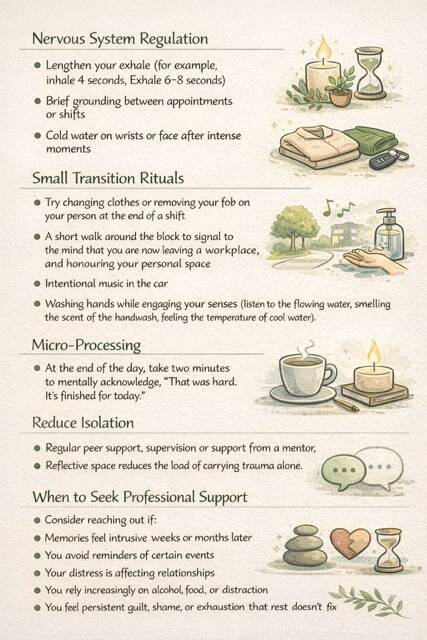
Nervous System Regulation
- Lengthen your exhale (for example, inhale 4 seconds, exhale 6–8 seconds)
- Brief grounding between appointments or shifts
- Cold water on wrists or face after intense moments
Small Transition Rituals
Create a small ritual that signals the end of caregiving mode. Here’s some ideas:
- Try changing clothes or removing your fob on your person at the end of a shift
- A short walk around the block to signal to the mind that you are now leaving a workplace, and honouring your personal space
- Intentional music in the car
- Washing hands while engaging your senses (listen to the flowing water, smelling the scent of the handwash, feeling the temperature of cool water).
Micro-Processing
At the end of the day, take two minutes to mentally acknowledge, “That was hard. It’s finished for today.” This helps the brain begin integration rather than suppression.
Reduce Isolation
Regular peer support, supervision or support from a mentor, and a reflective space reduces the load of carrying trauma alone.
When to Seek Professional Support
Consider reaching out if:
- Memories feel intrusive weeks or months later
- You avoid reminders of certain events
- You feel emotionally numb or disconnected
- Your distress is affecting relationships
- You rely increasingly on alcohol, food, or distraction
- You feel persistent guilt, shame, or exhaustion that rest doesn’t fix
Early support prevents deeper burnout. Seeking therapy is not a sign you can’t cope. It often means you’ve been coping alone for too long.
If you are curious about how EMDR could help, schedule a 15-minute consultation to see if my approach fits your needs:If you’re curious about whether EMDR might be helpful for you, you’re welcome to reach out for a conversation: